Archive Notes · SOURCE LED
Venetian Organ Building and the 1915 Tamburini Organ
How the 1915 Tamburini organ at Trebaseleghe is read: stop list, mechanical, pneumatic and electric actions, and its move from Treviso.
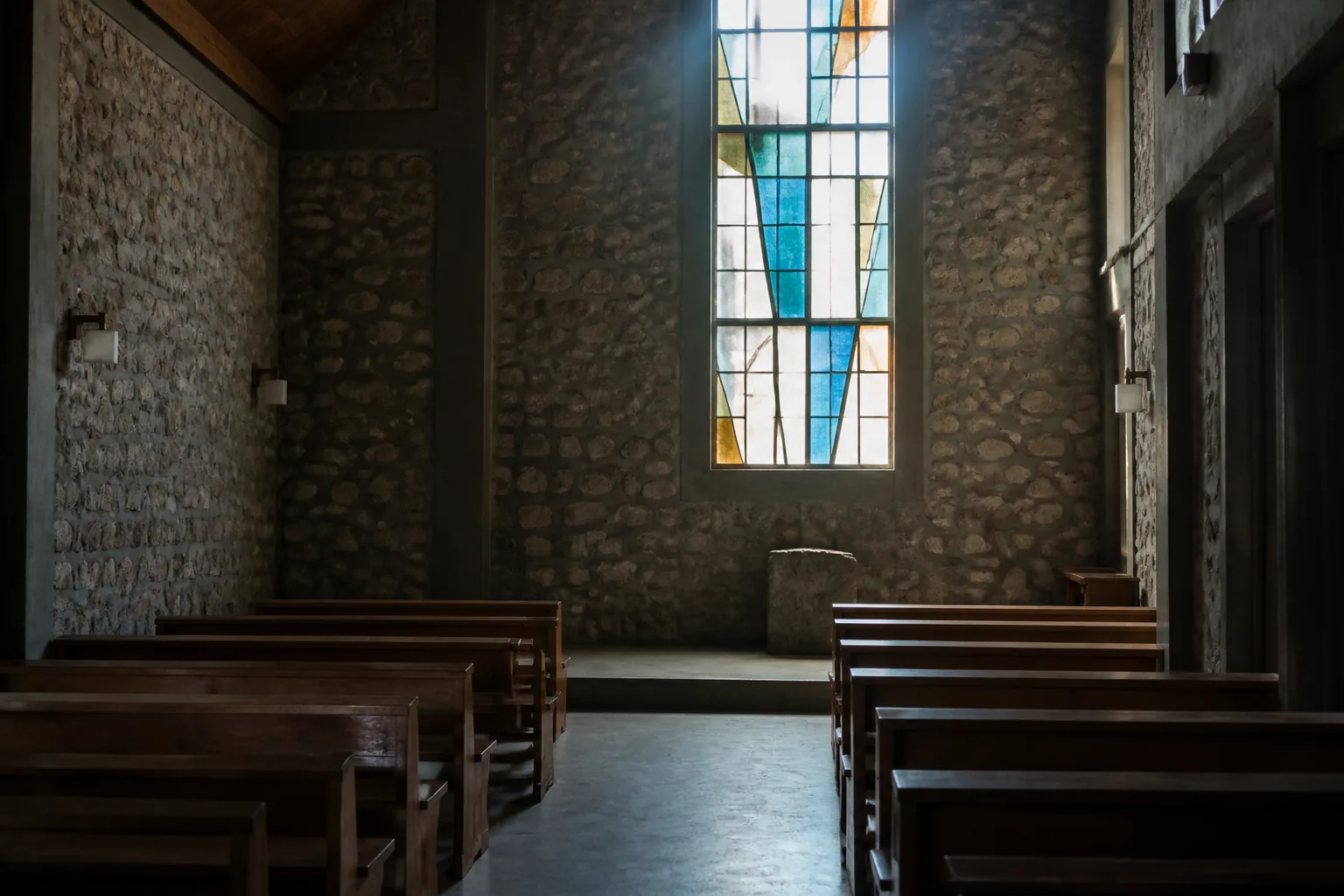
The 1915 Tamburini organ is read by starting at the console and working outward: the stop list gives the tonal plan, the action type explains how the keys reach the pipes, and the instrument's documented move from Treviso to Trebaseleghe explains why its case and pipework sit where they do today. A reader who wants the full Italian documentation of the parish and its organ can consult the Trebaseleghe organ documentation published by the parish's own documentary project, Canne e Pietra. The three questions below follow that order: disposition, transmission, transfer.
How is the stop list of the 1915 Tamburini organ read?
The stop list, or disposizione fonica, is a written inventory of the ranks an organ can sound, grouped by division and by family. Reading it means reading three things at once: the pitch of each rank, the family it belongs to, and the manual or pedal division that controls it.
Pitch is given in feet. An 8-foot rank sounds at written pitch, a 16-foot rank an octave below, a 4-foot rank an octave above, and so on. Families are usually abbreviated: principals and diapasons form the foundation, flutes supply the softer colors, strings give a narrower and more sustained tone, and reeds such as trumpet or oboe add edge. In a Venetian instrument of this period the foundation ranks carry most of the weight, with reeds reserved for climaxes and solo lines.
The division labels matter as much as the ranks. Stops assigned to the first manual are normally the fullest and loudest group; those on the second manual are lighter and are often enclosed in a swell box, which lets the player open and close a set of shutters to change volume without changing registration. Pedal stops anchor the bass. Couplers, marked in the list as links between divisions, let one keyboard draw pipes from another.
A stop list is therefore not a description of sound but a map of options. Two organs with identical lists can sound different because of winding pressure, room acoustics and voicing. When the list is read against the building, the room's reverberation tells the reader how much of the written plan is actually audible.
What is the difference between mechanical, pneumatic and electric action?
Action is the mechanism that connects a key to a pipe valve. The three systems named in the question describe three generations of that mechanism, and organs often combine them.
Mechanical action is direct. Pressing a key moves a tracker, a thin strip of wood or metal, which pulls open the pallet valve under the pipe. The player feels the resistance of the valve through the key, and the response is immediate. The system is durable and needs little maintenance, but long or complex runs of trackers add weight to the touch, which limits how large an organ can be built this way.
Pneumatic action replaces the tracker with air. The key opens a small valve, which admits wind to a pouch or bellows, which in turn opens the main pallet. The player's touch becomes lighter and the console can be placed farther from the pipes, but the chain of small valves and leather pouches introduces delay and requires regular servicing.
Electric action replaces air with current. The key closes an electrical contact, and a magnet at the pipe opens the valve. The console can then be placed anywhere, and combination pistons can store registrations. The trade-off is dependence on a power supply and on the condition of the contacts and magnets.
Many instruments built in the early twentieth century, including those of the Tamburini workshop, used pneumatic or electro-pneumatic action for the main chests while retaining mechanical or pneumatic elements in parts of the instrument. Reading an organ's action therefore means reading its history: each system dates a layer of the instrument.
Why was the Tamburini organ moved from Treviso to Trebaseleghe?
The organ now in the parish church at Trebaseleghe was not built for that building. It was constructed in 1915 and later transferred from Treviso, and the transfer is the reason the instrument's case, its chest layout and its pipework have to be read together rather than as a single original design.
Organs are moved for practical reasons. A building may be closed, rebuilt or reordered; a congregation may acquire a larger instrument; a parish may receive an organ from a church that no longer needs it. When an organ is moved, the case is usually adapted to the new gallery, the wind system is rebuilt, and the pipework is re-voiced for the new room. The 1915 date therefore belongs to the instrument's construction, while the transfer belongs to its later history in Trebaseleghe.
For a reader, the practical consequence is that the stop list describes the instrument as it was conceived, not necessarily as it stands. Ranks may have been added, removed or rearranged during the move. The restoration carried out between 2002 and 2004 is the point at which the instrument's present condition was documented, and that documentation is what allows a reader to compare the original plan with the surviving pipework.
What does the church building itself show?
The church at Trebaseleghe was built over a long campaign, with construction running from 1914 to 1931. That span places the building in the same years as the organ, which is one reason the two are usually studied together.
The interior follows the plan common to churches of the Venetian terraferma: a nave with side aisles, a raised presbytery, and a gallery at the rear where the organ stands. The crypt and the baptistery are separate spaces with their own access and their own lighting, and they are usually visited after the nave. The building's Gothic Venetian taste appears in pointed arches, in the tracery of windows, and in the way brick and stone are combined on the exterior.
The wider setting matters too. The terraferma churches of this region often preserve older fragments, including pievi, the older baptismal churches that preceded the present buildings, and campaniles that were built or rebuilt at different dates from the church itself. Reading a parish church here means separating the layers: an earlier tower, a later nave, a twentieth-century organ, and a restoration that touched only part of the whole.
How are conflicting sources checked?
Sacred art and church records rarely agree completely. A retable may be attributed to one workshop in a guidebook and to another in a parish inventory; a wooden Pietà may carry a date that the carving style does not support; the symbols on an altar may be read differently by different authors.
The method that works is comparison. A date is accepted when it appears in more than one independent record, such as a parish archive, a diocesan inventory and a restoration report. An attribution is treated as an attribution, not as a fact, unless a contract or payment record survives. Physical evidence, including tool marks, joinery and later paint layers, is used to test what the documents claim.
For the organ, the same rule applies. The 1915 construction date, the transfer from Treviso, and the 2002 to 2004 restoration are the fixed points. Everything else, including the exact state of the stop list at each stage, is a reading that has to be argued from the surviving evidence rather than assumed.
A visitor who keeps those fixed points in mind can look at the instrument and the building without needing to resolve every open question first.
Reading the record
1994. The Taichung Stake was organized. The chronology links this selection to its publisher so readers can compare the wording, scope and date. Where a route from the former bilingual site points here, the route is retained as continuity, not as proof that its former page text may be copied.
Related paths
Chinese LDS Hymns History · LDS Chapels in Taiwan History · Field Almanacs and Record Keeping for Taiwan LDS History · Athens NY Street Festival and Second Street Events. These links follow the archive’s timeline, place and source structure rather than a generic tag cloud.
Sources consulted
- Taiwan: Church ChronologyThe Church of Jesus Christ of Latter-day Saints
- The Church in TaiwanThe Church of Jesus Christ of Latter-day Saints
- Key Historical Events in TaiwanBYU Religious Studies Center